
World Wetlands Day 2010: Caring for Wetlands - an Answer to Climate Change
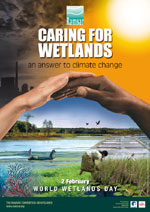 Bonn, 2 February 2010 - World Wetlands Day WWD
is being celebrated around the world today
under the theme “Wetlands, Biodiversity and Climate
Change”. This annual event marks the date of the signing
of the Convention on Wetlands on 2 February 1971 in the
Iranian city of Ramsar and represents a unique opportunity
to raise awareness about the importance of wetlands around
one central theme each year.
Bonn, 2 February 2010 - World Wetlands Day WWD
is being celebrated around the world today
under the theme “Wetlands, Biodiversity and Climate
Change”. This annual event marks the date of the signing
of the Convention on Wetlands on 2 February 1971 in the
Iranian city of Ramsar and represents a unique opportunity
to raise awareness about the importance of wetlands around
one central theme each year.This year’s theme, “Wetlands, Biodiversity and Climate Change” and the associated slogan “Caring for Wetlands: an Answer to Climate Change” highlight the impact of climate change on wetland ecosystems and the role wetlands play in climate change mitigation and adaptation.
“This year’s theme […]
captures the sense of urgency we all feel about the need
to address the potentially disastrous consequences of global
climate change as quickly as possible, particularly in the
wake of the Copenhagen meeting […], and it emphasizes
our belief that the role of wetlands in mitigating and adapting
to the effects of climate change must be central in all
future debates about the way forward.” said Anada
Tiega, Secretary General of the Ramsar Convention on Wetlands
in his message for World Wetlands Day 2010.
The WWD
theme also links up to this year’s United
Nations International Year of Biodiversity 2010 by highlighting
wetlands as one of the world’s most diverse ecosystems
rich in biodiversity.
“Like tropical forests and coral reefs, wetlands are one of the most productive ecosystems in the world. They are an important habitat for an immense variety of species ranging from micro-organisms to plants, insects, amphibians, reptiles, mammals and many birds.” said Elizabeth Maruma Mrema, the Executive Secretary of the Convention on Migratory Species. “World Wetlands Day is a chance to celebrate the amazing diversity of species dependent on wetlands. At the same time it is also an opportunity to showcase the many other important functions wetlands provide.” said Mrema.
In addition to hosting many species, wetlands, such as peatlands, marshes, floodplains, mangrove forests and lakes also offer many ecosystem services, provide food, fibre, shelter and drinking water. They function as natural water filters and act as sponges absorbing surplus volumes of water in heavy rainfalls while giving it back slowly in periods of drought. As such, they have a water regulating and storage function which can serve as natural protection against flooding, droughts and storms.
Unfortunately, wetland systems are very vulnerable to changes in both the quality and quantity of their water supply and it is expected that climate change will cause additional wetland shrinkage, next to drainage, upstream dams or pollution. The loss of wetlands, accelerated by climate change will also affect the many species that depend on wetlands as their habitat.
“Migratory waterbirds are particularly vulnerable because of their use of wetland habitats during migration as stopover sites for feeding, resting or to sit out bad weather.” said Mr. Bert Lenten, Executive Secretary of the African-Eurasian Waterbird Agreement (UNEP/AEWA). The loss and destruction of wetlands will compound other effects of climate change faced by migratory waterbirds such as changes in relative timing of food supply, more extreme weather conditions and shifts in their breeding and wintering range.
World Wetlands Day 2010 will help to provide a sense of how wetland biodiversity can be adversely affected by climate change, but also highlight the importance of robust biological diversity in maintaining the wetlands’ ability to provide the ecosystem services, in the face of climate change effects, upon which we all depend.
For more information please visit: