

Wetlands Conservation is Waterbird Conservation: Ramsar COP15 Concludes with Commitments That Strengthen Flyway Conservation
Bonn, 31 July 2025 – Convened under the theme “Protecting Wetlands for Our Common Future”, the 15th Meeting of the Conference of the Parties (COP15) to the Ramsar Convention on Wetlands concluded in Victoria Falls, Zimbabwe today.
Over the past two weeks, governments, experts, and civil society from across the globe came together at Ramsar COP15 to reaffirm the essential role of wetlands in sustaining life on Earth – for people and for nature.
Jacques Trouvilliez, Executive Secretary of the Agreement on the Conservation of African-Eurasian Migratory Waterbirds (AEWA) said: “For AEWA, which works to conserve migratory waterbirds and their habitats across Africa and Eurasia, the outcomes of Ramsar COP15 are particularly significant. Wetland conservation is waterbird conservation and healthy wetlands are the foundation on which waterbird populations depend. Protecting and restoring these ecosystems is central to our shared mission and contributes to improving the livelihoods of local communities.”
The Ramsar Convention was adopted in 1971 as the “Convention on Wetlands of International Importance especially as Waterfowl Habitat”, which shows how the conservation of migratory waterbirds and their habitats was an original focus and mandate of the Convention.
“Our two treaties share a strong synergy rooted in the ecosystems we protect – wetlands – which are essential habitats for migratory waterbirds. Healthy wetlands are key to successful migration, breeding and survival of countless bird species that AEWA works tirelessly to conserve and protect,” said Dr Musonda Mumba, Secretary General of the Convention on Wetlands in a recent video message to mark the 30th Anniversary of AEWA.
Among the resolutions adopted by Ramsar COP15 in Zimbabwe, two are of particular relevance to the work of AEWA. The resolution on the establishment of the Global Waterbird Estimates Partnership (GWEP) (Ramsar COP 15 Doc 23.11 Rev.1) and the resolutionon “strengthening national actions on the conservation and restoration of waterbird flyways” (Ramsar COP 15 Doc 23.16 Rev.1) stand out as COP15 decisions that directly link to AEWA and will likely have the greatest impact on flyway-scale waterbird conservation efforts.
“With the adoption of these two resolutions by Ramsar COP15, the historic linkage between Ramsar and AEWA has been re-confirmed and strengthened. Wetlands are and will remain critical waterbird habitats, and the adoption of these two resolutions show that their conservation along the flyway remains a top priority for the countries that have signed up to Ramsar and AEWA,” says Trouvilliez.
The two Ramsar waterbird-related resolutions are timely amid ongoing global declines of migratory waterbird populations and the underpinning loss and degradation of wetlands along all the mayor flyways of the world.
Released a few days before the opening of Ramsar COP15, the Global Wetland Outlook 2025 (GWO) delivered a stark warning that the world’s wetlands are disappearing at an alarming rate. The report warns that if current trends continue, up to 20 per cent of the world’s remaining wetlands could disappear by 2050 and that the planet has already lost an estimated 411 million hectares of wetlands – a decline of 22 per cent since 1970.
“The Ramsar GWO report is the most comprehensive global assessment of wetlands to date, and it confirms what we have seen in earlier climate impact studies linked to AEWA: The decline of wetlands in Africa is real and will have a dramatic impact on waterbirds, particularly in Africa, but also in the Middle East,” said Trouvilliez. “This scenario can only be prevented through unprecedented collaboration across borders and across all sectors. To halt or at least reduce the impact of this trend, we need to build a strong alliance of countries committed to maintaining a resilient network of wetlands for waterbirds and communities across the African-Eurasian Flyway,” says Trouvilliez.
The new Ramsar GWO report revealed that the decline of wetlands is especially severe in regions such as Latin America, the Caribbean and Africa, where degradation has accelerated dramatically in recent years.
“As we look ahead from COP15 to MOP9 and beyond, AEWA remains deeply committed to working hand in hand with the Ramsar Convention on Wetlands and its partners to try to address these pressing challenges affecting both wetlands and waterbirds along our flyway,” said Trouvilliez. “We therefore strongly welcome the renewed commitment from Ramsar’s Contracting Parties to the concept of flyway conservation and to highlighting it as an important large-scale biodiversity conservation action that contributes to the delivery of the Kunming-Montreal Global Biodiversity Framework,” concludes Trouvilliez.
AEWA MOP9 - The 9th Meeting of the Parties to AEWA will take place 11- 14 November 2025 in Bonn, Germany and will also be a good occasion to highlight the strong partnership and linkages between the Ramsar Convention on Wetlands and AEWA.
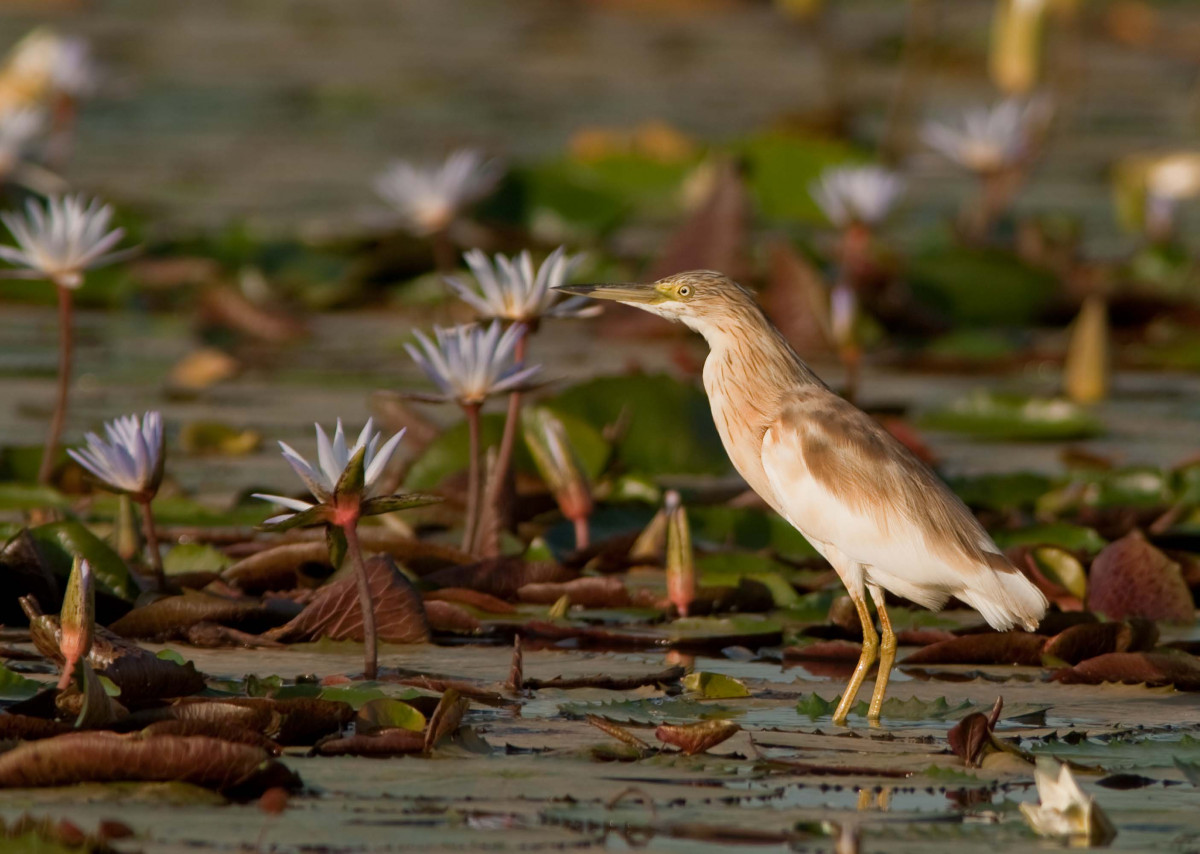
Squacco Heron (Ardeola ralloides) in Djoudj National Park, Senegal (Photo: Sergey Dereliev)