
Waterbirds in the UK 2008/2009 - new WeBS annual report released
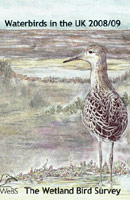 22
August 2010 - "Waterbirds In the UK 2008/09" -
the new Wetland Bird Survey (WeBS) annual report for the
UK has just been released, highlighting contrasting trends
for the UK's wintering waterbirds.
22
August 2010 - "Waterbirds In the UK 2008/09" -
the new Wetland Bird Survey (WeBS) annual report for the
UK has just been released, highlighting contrasting trends
for the UK's wintering waterbirds. The report shows that the UK’s estuaries and other wetlands have seen several notable changes in the birds using them in recent years. Little Egret and Avocet are now present in higher numbers in the UK than ever before, but familiar species such as Ringed Plover and Dunlin are at all-time lows, and other coastal waders such as Redshank, Curlew and Bar-tailed Godwit have also experienced recent declines.
Chas Holt, one of the authors behind the report, said: “Just
20 years ago, Little Egrets and Avocets were scarce in
the UK but nowadays they are a familiar sight. At the
same time numbers of some of our internationally important
wader populations are in decline – probably partly
because they are shifting range in response to climate
change. To see how all species responded to last winter – the
coldest across the UK for more than 30 years – will
prove especially fascinating.”
The latest WeBS report, covering the winter of 2008/09,
documents the expansion of four native waterbird populations
in the UK, with Pink-footed Goose, Svalbard Barnacle
Goose, Little Egret and Avocet all noted at record levels.
With Avocet for example increasing by over 1000% in the
last twenty years.
In contrast, populations of six species reached an all-time low point; Mallard, Pochard, Goldeneye, Red-breasted Merganser, Ringed Plover and Dunlin – all of which have declined by at least 20% in the last twenty years.
The Wetland Bird Survey (WeBS) on which the report is based, is a joint scheme of the British Trust for Ornithology (BTO), the Royal Society for the Protection of Birds (RSPB), the Joint Nature Conservation Committee (JNCC) and the Wildfowl & Wetlands Trust (WWT) to monitor non-breeding waterbirds in the UK. The principal aims of the scheme are to identify population sizes, determine trends in numbers and distribution, and identify important sites for waterbirds in the UK. This is one of the well-established monitoring schemes within the Agreement area and the monitoring data derived from WeBS is also crucial for the UK to fulfil its obligations under international conservation treaties such as AEWA and the Convention on Migratory Species (CMS).
Further information:
- The full report "Waterbirds in the UK 2008/09" is available on the Wetland Bird Survey (WeBS) Website (Full PDF version of the report)