
Suspension of Trade of Black and Grey Crowned Cranes Decided by CITES COP
 Bangkok/Bonn,
12 March 2013 - As the 16th meeting of the Conference
of the Parties (CoP16)
to the Convention on International Trade in Endangered Species
of Wild Fauna and Flora (CITES)
winds up in Bangkok, Thailand (3-14 March 2013), a decision
related to the suspension of trade related to the Black
and Grey Crowned Cranes has already been announced.
Bangkok/Bonn,
12 March 2013 - As the 16th meeting of the Conference
of the Parties (CoP16)
to the Convention on International Trade in Endangered Species
of Wild Fauna and Flora (CITES)
winds up in Bangkok, Thailand (3-14 March 2013), a decision
related to the suspension of trade related to the Black
and Grey Crowned Cranes has already been announced.
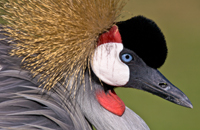
The 63rd Meeting of the CITES Standing Committee, which met right before the 16th Conference of the Parties, recommended to suspend trade in Black Crowned Cranes (Balearica pavonina) from Guinea, Sudan and South Sudan and trade in Grey Crowned Cranes (Balearica regulorum) from Rwanda, Uganda and Tanzania until these countries demonstrates compliance with Article IV, paragraphs 2 (a) and 3 for these species, and provides full information to the CITES Secretariat regarding compliance with the recommendations of the Animals Committee. Grey Crowned and Black Crowned Cranes, often considered icons of the African landscape, have dramatically declined in the wild over the last several decades.
Both, the Black Crowned Crane as well as the Grey Crowned Crane are listed under AEWA and are priority species for the Agreement because of their IUCN Red List status – classified respectively as Vulnerable and Endangered. The UNEP/AEWA Secretariat will be soon launching an international action planning process for the Grey Crowned Crane with a multi-stakeholder workshop in September 2013 hosted by the Government of Rwanda. The process and the event will be undertaken in cooperation with the African Crane Conservation Programme – a joint initiative of the Endangered Wildlife Trust and the International Crane Foundation.
Tanzania, Rwanda, Uganda, Guinea, Nigeria, Sudan and South Sudan all underwent a full review, conducted by the CITES Significant Trade Review Process, of their wild caught Black and Grey Crowned Crane trade in order to determine the impact of this trade on their wild crane populations.
The cranes are usually removed illegally from the wild, often as chicks, for the captive trade market. In some cases, this involves domestication where cranes are kept in private gardens, around homesteads and in hotel gardens. There is however, a big demand for the species in captive facilities around the world.
The CITES suspension is in place until the country in question can prove that export will not be detrimental to the wild population and that they are able to successfully monitor export permits granted and actual exports, with the goal of limiting exports in order to maintain the species status.
For more information:
- (CITES CoP 16)
- Video from the Endangered Wildlife Trust (EWT) and the International Crane Foundation (ICF) entitled: Grey Crowned Cranes Need Our Help!