
Norway hosts the 1st Meeting on the Implementation of the AEWA International Species Management Plan for the Pink-footed Goose
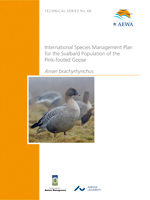 Bonn
14 August 2012 - The 1st meeting on the
Implementation of the AEWA International Species Management
Plan (ISMP) for the Svalbard population of the Pink-footed
Goose took place in Longyearbyen, Svalbard, Norway from
4 – 8 August 2012. Over 20 participants representing
Contracting-Parties to which the ISMP applies, hunting
and conservation organisations as well as international
experts came together in the breeding area of this Pink-footed
Goose population to discuss the coordination and implementation
of the first AEWA Species Management Plan, which was recently
adopted by the 5th Meeting of the Parties (MOP5)
in May 2012 in La Rochelle, France.
Bonn
14 August 2012 - The 1st meeting on the
Implementation of the AEWA International Species Management
Plan (ISMP) for the Svalbard population of the Pink-footed
Goose took place in Longyearbyen, Svalbard, Norway from
4 – 8 August 2012. Over 20 participants representing
Contracting-Parties to which the ISMP applies, hunting
and conservation organisations as well as international
experts came together in the breeding area of this Pink-footed
Goose population to discuss the coordination and implementation
of the first AEWA Species Management Plan, which was recently
adopted by the 5th Meeting of the Parties (MOP5)
in May 2012 in La Rochelle, France.
Over the past decades the Svalbard population of the Pink-footed Goose has increased considerably and reached an estimated population size of 69,000 individuals. On the IUCN Red List, the Pink-footed Goose is also classified as “Least Concern”. Compared to other waterbird species populations which are in decline, this is a conservation success story but the increasing population of the Pink-footed Goose, along with other goose species, has progressively brought them into conflict with agricultural interests. Furthermore, there is concern about degradation of vulnerable tundra vegetation in Svalbard due to increasing goose grazing pressure.
The main focus of the meeting was to consider measures on how to reduce these conflicts but at the same time maintaining the population at a favourable conservation status. To achieve an adaptive management of the Pink-footed Goose, different harvest management strategies, latest information on population growth and hunting practices were discussed and evaluated by meeting participants. Other meeting topics included he definition of the structure and role of the Pink-footed Goose International Working Group and its Terms of Reference as well as the funding and coordination of it.
This meeting was organised by the Aarhus
University, Denmark and kindly sponsored by the Norwegian
Directorate for Nature Management.
For more information, please visit: