
The Kingdom of Morocco Becomes the 68th Contracting Party to AEWA
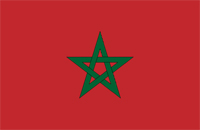 Bonn,
25 October 2012 - Following the recent accessions of
Gabon and Zimbabwe to AEWA, the Kingdom of Morocco, one
of the AEWA Signatories which signed the Agreement in 1999,
has now submitted its instruments of Ratification to the
AEWA Depositary and will raise the total number of AEWA
Contracting Parties to 68. The Agreement will enter into
force for Morocco on 1 December 2012.
Bonn,
25 October 2012 - Following the recent accessions of
Gabon and Zimbabwe to AEWA, the Kingdom of Morocco, one
of the AEWA Signatories which signed the Agreement in 1999,
has now submitted its instruments of Ratification to the
AEWA Depositary and will raise the total number of AEWA
Contracting Parties to 68. The Agreement will enter into
force for Morocco on 1 December 2012.
The Kingdom of Morocco is located in North Africa and shares borders with Algeria to the East and Mauritania to the South. To the West, it has a coast on the Atlantic Ocean that reaches past the Strait of Gibraltar to the Mediterranean Sea. By virtue of its position opposite Spain on the southern side of the narrow Straits of Gibraltar, Morocco forms an ecological bridge between Europe and the African continent, with fauna and flora showing a mixture of Palearctic and Afrotropical elements. It is also a significant bottleneck on a main migration route between Europe and Africa for millions of migratory waterbirds, which use the East Atlantic Flyway.
Morocco has relatively high levels of biodiversity for a country of its size, with the Avifauna being the most notable. According to the BirdLife Data Zone a total of 337 bird species are known to occur in Morocco; 107 of these are migratory waterbirds listed under AEWA. Out of these 107 species, one is classified as Vulnerable (Marbled Teal Marmaronetta angustirostris), one as Endangered (White-headed Duck Oxyura leucocephala), two as Critically Endangered (Northern Bald Ibis Geronticus eremita and Slender-billed Curlew Numenius tenuirostris) and six as Near Threatened (Ferruginous Pochard Aythya nyroca, Black-winged Pratincole Glareola nordmanni, Audouin's Gull Larus audouinii, Corncrake Crex crex, Black-tailed Godwit Limosa limosa and the Eurasian Curlew Numenius arquata) on the IUCN Red List.
A total of 46 Important Bird Areas (IBAs) have been identified in the country, with the majority concentrated in the northern part. Examples are the Parc National de Dakhla, the Msseyed or the Barrage Al Massira, all of which have equally been identified under the Wings Over Wetlands Critical Sites Network Tool as very important for the conservation of migratory waterbirds and wetlands.
In addition to AEWA, Morocco has also ratified the Convention on Biological Diversity (CBD), the Convention on International Trade in Endangered Species of Wild Fauna and Flora (CITES), the Convention to Combat Desertification (UNCCD), the United Nations Framework Convention on Climate Change (UNFCCC), the Convention on the Conservation of Migratory Species and Wild Animals (CMS), the World Heritage Convention and the Ramsar Convention on Wetlands.
The UNEP/AEWA Secretariat warmly welcomes the Kingdom of Morocco and is looking forward to working closely with the responsible national authorities and other stakeholders in Morocco to support implementation of the Agreement in the country.