

Every Bird Counts: World Migratory Bird Day 2026 Highlights How Every Observation Matters
Bonn/Boulder/Incheon, 8 May 2026 - As millions of migratory birds cross continents and oceans, people across the planet are preparing to mark World Migratory Bird Day 2026, with the first peak day for the year taking place on Saturday, 9 May 2026.
This year’s campaign is guided by a simple but powerful message: “Every Bird Counts – Your Observations Matter!” – highlighting the importance of community science (also referred to as citizen science) in safeguarding migratory birds along all the world’s flyways.
World Migratory Bird Day is a UN-backed, global awareness-raising campaign coordinated by four international partners: the Convention on the Conservation of Migratory Species of Wild Animals (CMS), the Agreement on the Conservation of African Eurasian Migratory Waterbirds (AEWA), the East Asian–Australasian Flyway Partnership (EAAFP) and Environment for the Americas (EFTA). Together, these organizations unite governments, scientists, communities and individuals around a shared mission – to raise awareness on the need to conserve migratory birds and the habitats they depend on, and to highlight the importance of international cooperation.
A Campaign Shaped by Migration Itself
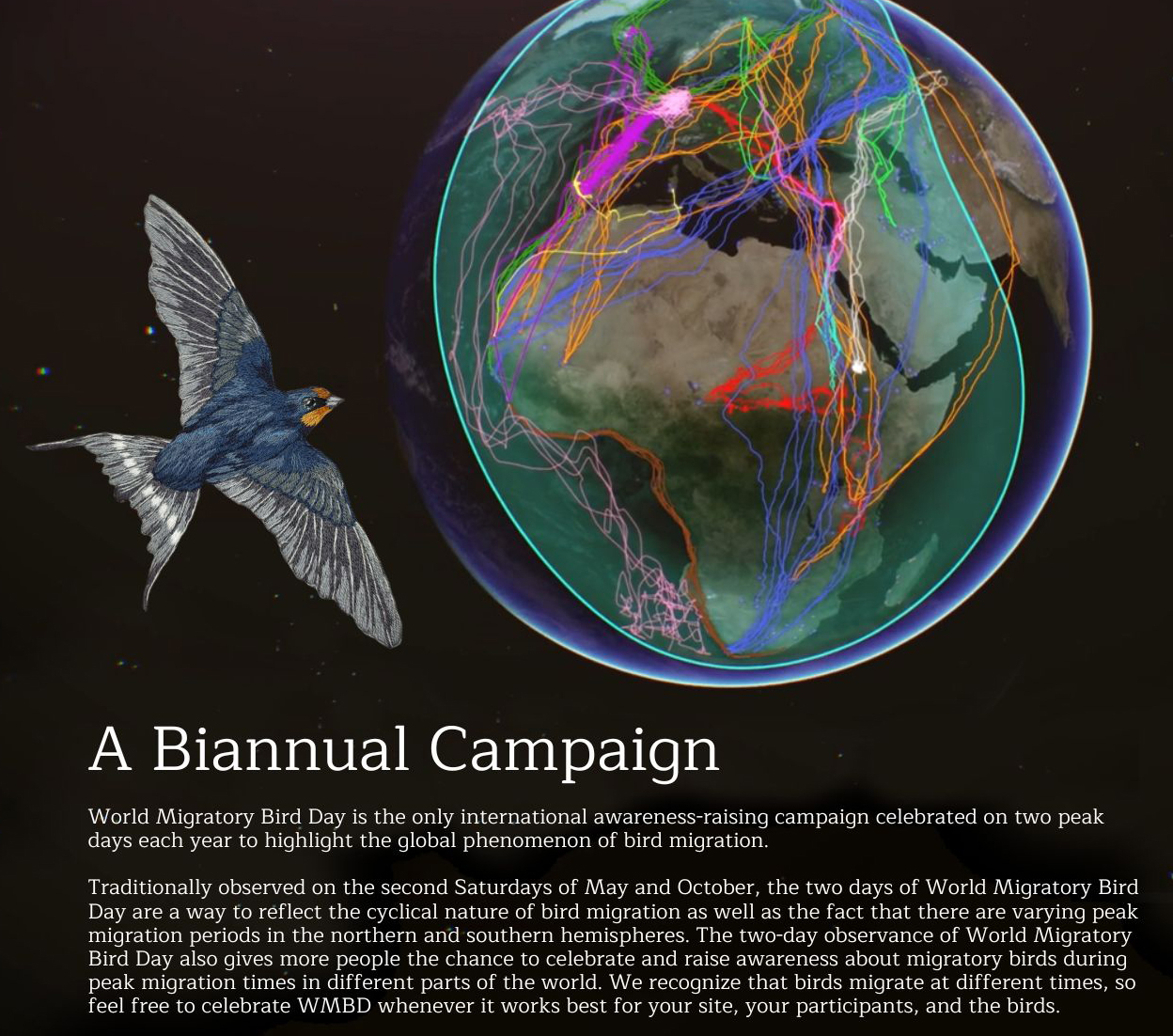 World Migratory Bird Day is unique in the global conservation calendar. Unlike any other international environmental observance, it is celebrated twice each year, on the second Saturday in May and in October, reflecting the cyclical nature of bird migration and the fact that peak migration occurs at different times in the northern and southern hemispheres. The two peak days also allow more people, in more places, to participate in the campaign and experience nature and the spectacle of bird migration at a time when birds are most visible in their regions.
People Powering Bird Conservation
This year’s World Migratory Bird Day theme shines a spotlight on community and citizen science as a cornerstone of modern conservation. By focusing on volunteer‑driven efforts that underpin bird research and conservation, the campaign highlights how individuals, communities, and organizations around the world are helping to build the knowledge base needed to conserve migratory birds across borders and flyways.
The campaign celebrates the millions of bird enthusiasts worldwide whose observations and participation in monitoring programmes generate the data that inform conservation action and policy decisions. From simple backyard sightings to trained volunteers participating in coordinated global surveys, these collective efforts help scientists detect population trends, identify emerging threats and guide conservation measures at local, national and international levels.
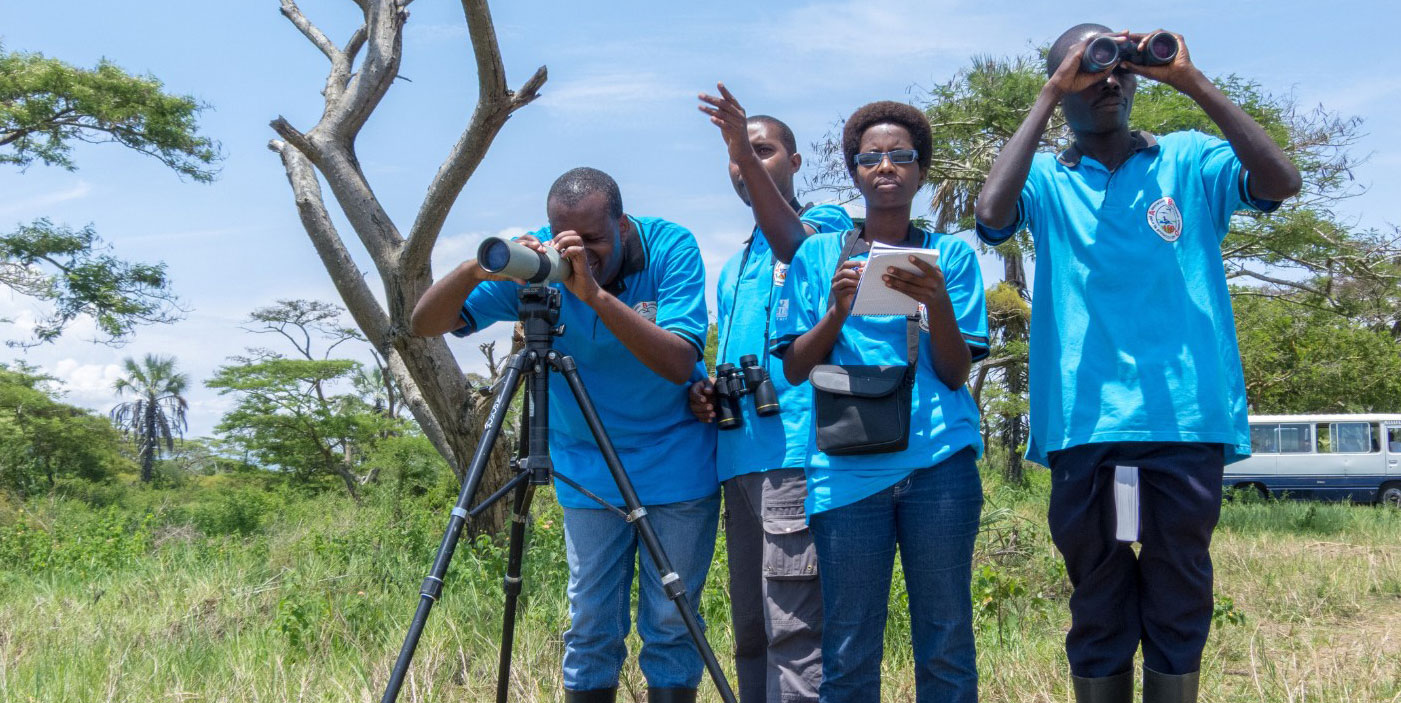
People of all ages and backgrounds across the planet are contributing meaningful observations, transforming our understanding of bird migration and the status of populations. For example, declines in species such as the Merlin – one of the flagship species of this year's campaign – were first detected through one  of North America’s oldest and largest community science initiatives, the Christmas Bird Count. Another example is the 30 year old community science programme Journey North, where individual observations in nature help experts better understand shifts in the arrival times of hummingbirds and many other migratory species. Knowing arrival times supports conservation by helping scientists and conservationists identify important habitats, anticipate mismatches between birds and their food sources and better protect the ecosystems migratory species depend on throughout their annual journeys.
Connecting People, Data and Flyways Worldwide
Citizen and community science play an increasingly vital role in conserving migratory birds across the world’s flyways. Digital platforms such as eBird, iNaturalist, Observation, BirdLasser, Journey North, Ornitho, and BirdTrack, among others, now empower people everywhere to share bird observations instantly, transforming experiences in nature into data that inform conservation action and policy. Open to people of all ages and backgrounds, these tools ensure that local observations contribute to a growing global understanding of bird migration.
Across all flyways, these efforts are already making a difference. In the East Asian–Australasian Flyway, volunteers help track the critically endangered Spoon-billed Sandpiper – another flagship species of this year's campaign – through the EAAFP Leg Flag Sightings Database, while the International Waterbird Census engages communities across the world to monitor waterbirds and wetlands.
In Europe, EURING supports international ringing and migration research, while the Pan‑European Common Bird Monitoring Scheme (PECBMS) uses long‑term data on common breeding birds to track changes in the overall state of nature across the continent. In addition to the platforms already mentioned, millions of people across the Americas contribute observations through platforms such as the Global Collision Mapper, helping us learn where migratory birds are most at risk from windows and light pollution during their journeys and contributing to solutions to protect them. These initiatives are just a few of a growing number that show how shared knowledge, individual observations and local action can support and help drive bird conservation worldwide.
 Celebrating the International Waterbird Census
This year’s theme and focus on citizen/community science also celebrates the 60th anniversary of the International Waterbird Census (IWC), highlighting six decades of coordinated waterbird monitoring efforts across all major migratory flyways. Coordinated by Wetlands International, the IWC is one of the world’s largest and longest‑running waterbird monitoring programmes, operating in 143 countries and relying largely on the dedication of volunteers. Coinciding with World Migratory Bird Day 2026, this milestone underscores the crucial role the IWC has played in generating data used to assess species status, identify key wetland sites, and inform national and international conservation policy worldwide.
New Americas Flyway Atlas
Another example of a state‑of‑the‑art tool powered by citizen science data is the Americas Flyways Atlas, recently unveiled at CMS COP15 in Brazil.The new interactive platform maps the migratory routes of vulnerable bird species across the hemisphere, helping countries better identify and protect the critical sites birds depend on along this important flyway. At its core, the Atlas is built on millions of observations contributed by birdwatchers, scientists and community members through platforms such as eBird, transforming individual sightings into one of the most extensive biodiversity data sets ever assembled. Through advanced analysis and modelling, those observations are now being transformed into clear, accessible insights that help decision makers identify priority habitats, guide coordinated conservation efforts and inform international policy.
World Migratory Bird Day 2026 invites everyone to take part in this global effort and to make use of and contribute to the many citizen and community science efforts that exist worldwide. By observing, recording and sharing what they see, people across the planet can help protect vital habitats, make communities safer for birds and ensure migratory species continue to connect people, places and ecosystems across the globe.

Global Campaign Visuals and Events
At the heart of the 2026 campaign is the official World Migratory Bird Day global poster. Available in many languages, including all six UN languages, the artwork reflects this year’s theme through intricate embroidery inspired designs symbolizing the connection of people and nature across flyways.
The artwork for the poster was created by Luísa Lacerda, a Brazilian artist from Rio de Janeiro whose work blends music, embroidery and a deep love of birds. The artwork features the seven flagship migratory bird species chosen for this year’s campaign, representing thousands of others that use the various flyways that span across the Americas, Africa, Eurasia and the East Asian–Australasian region.
Among the seven migratory bird species depicted on the global World Migratory Bird Day poster is the Spoon-billed Sandpiper. Twice each year, this critically endangered shorebird undertakes an extraordinary migration of thousands of kilometres, travelling between the Arctic tundra and the coastal wetlands of South and Southeast Asia while facing multiple threats along its way. Named for its distinctive spoon‑shaped bill, this tiny bird also symbolizes the power of individual and collective action – from reducing plastic pollution and contributing to community science, to strengthening cross‑border collaboration to address the impacts of industrialization, coastal development and habitat loss.
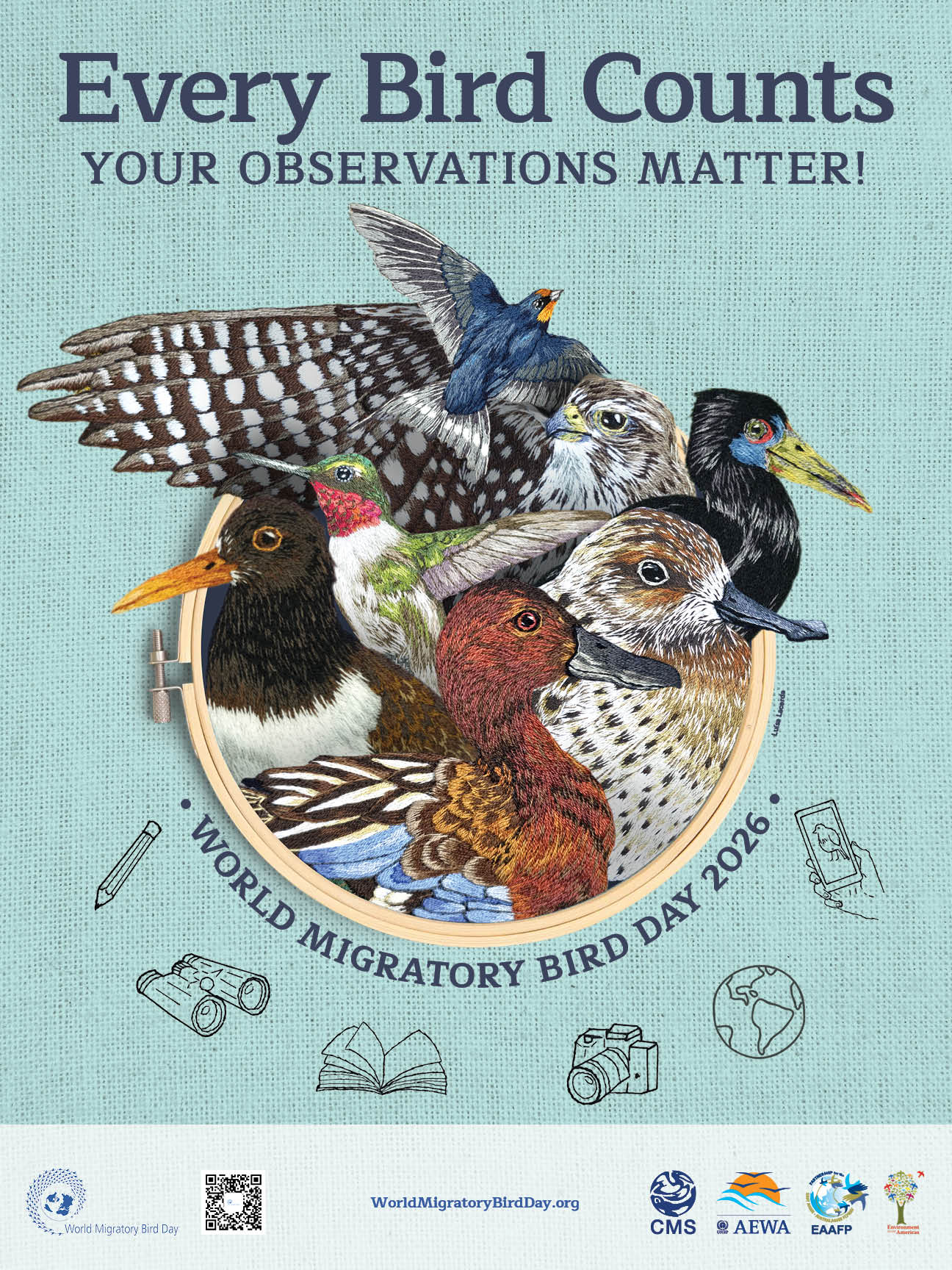
World Migratory Bird Day 2026 Global Poster (Artwork by Luísa Lacerda) available for download here in other languages.
Growing Number of Events
 Around the world, hundreds of registered events – from bird walks, festivals and film screenings to school programmes, exhibitions and clean ups – are being organized to mark World Migratory Bird Day again in 2026. A growing number of these activities are showcased on the global World Migratory Bird Day Events Map, where people can find events taking place near them and/or register their own.
Throughout the year, Environment for the Americas is also hosting a Global Webinar Series on this year’s World Migratory Bird Day theme, offering online sessions that explore a wide range of topics around migratory birds, community and citizen science, and conservation action.
How You Can Participate
You can get involved in World Migratory Bird Day by participating in conservation-focused projects and activities that contribute to long-term monitoring and research, such as community science programmes, coordinated bird counts, or public events that build awareness of how sustained data collection supports the conservation of migratory birds.
There are many ways you can take part in this global effort, including:
- Observe and record birds where you live – at home, school, parks or wetlands;
- Join local or global bird counts, such as the International Waterbird Census (IWC);
- Find, join and/or register an event on the global World Migratory Bird Day events map;
- Join a webinar or online activity to learn more about the importance of community and citizen science and bird conservation;
- Share the WMBD poster and other materials in your community, with family and friends and through social media;
- Practice ethical birding, ensuring birds stay safe while being observed.
Even small, regular observations can add value when they are part of a larger, ongoing effort to track populations over time. However you choose to participate, your observations can help strengthen the science that informs conservation policy across the world’s flyways.
Help spread the word about the importance of citizen and community science and international cooperation in conserving migratory birds across borders! Participate in World Migratory Bird Day 2026 on Saturday, 9th of May and join millions of people worldwide in celebrating the phenomenon of bird migration – proving that every bird counts, and every observation matters.
Reflecting on the recently launched Americas Flyway Atlas, Amy Fraenkel, Executive Secretary of CMS, says:
“We can already see the power of this approach in a new online mapping tool launched at our recent Conference of the Parties in Brazil, known as CMS COP15. Through a partnership with the Cornell Lab of Ornithology, we launched the Americas Flyways Atlas – an interactive tool that brings together millions of citizen-science observations with advanced scientific modelling to map the annual journeys of highly vulnerable migratory birds across the Americas. By showing where birds breed, stop over, and spend the winter, the most important places that need to be protected are more clearly identified.”
—
Reflecting on the importance of the International Waterbird Census (IWC), Sergey Dereliev, Acting Executive Secretary of AEWA, says:
“World Migratory Bird Day 2026 reminds us that citizen science is instrumental for bird conservation. As we celebrate the day and the 60th anniversary of the International Waterbird Census this year, let us pay tribute to the thousands of dedicated volunteers whose meticulous observations inform policy decisions for migratory bird conservation along all global flyways. Their collective commitment is a source of inspiration and hope, reminding us that every bird counts and every observer makes a difference!”
—
Highlighting the importance of each observation to science and conservation, Jennifer George, Chief Executive of the EAAFP, says:
“A single observation, a bird with a tiny colour ring seen on a beach, a band recorded during a morning birdwatch, a flock counted on a winter wetland – can unlock a story of migration that spans countries and cultures. Each observation becomes a thread of knowledge that connects places, people, and ecosystems across the globe.”
—
Emphasizing the importance of community science and the inclusive power of participation, Susan Bonfield, Director of EFTA, the main organization coordinating World Migratory Bird Day activities across the Americas Flyway, says:
“Much of what we know about bird movements and threats comes from people who share what they see in their communities. By participating in community science, people of all ages can contribute to our understanding of where and even when birds may need our help.”
- Links to resources
- About World Migratory Bird Day
World Migratory Bird Day (WMBD) is a global campaign that serves as a beacon for conservation efforts aimed at conserving migratory birds and their journeys across borders. Celebrated twice a year – in May and October – WMBD reflects the cyclical nature of bird migration and the varying peak bird migration periods in the northern and southern hemispheres. This worldwide initiative triggers countless educational events, uniting people in a common goal to conserve and protect migratory birds and their habitats.
Each year, WMBD focuses on a central theme to inspire action and concentrate global efforts towards preserving the habitats and wellbeing of migratory birds.
The WMBD campaign is organized by the Convention on the Conservation of Migratory Species of Wild Animals (CMS), the African-Eurasian Migratory Waterbird Agreement (AEWA), Environment for the Americas (EFTA), and the East Asian–Australasian Flyway Partnership (EAAFP).
Join us in celebrating World Migratory Bird Day and take part in this global effort to create a more sustainable future for migratory birds and our shared natural world.
For more information about World Migratory Bird Day and ways to get involved, please visit www.worldmigratorybirdday.org
About the Convention on Migratory Species (CMS)
An environmental treaty of the United Nations, the Convention on the Conservation of Migratory Species of Wild Animals (CMS) provides a global platform for the conservation and sustainable use of migratory animals and their habitats. This unique treaty brings governments and wildlife experts together to address the conservation needs of terrestrial, aquatic, and avian migratory species and their habitats around the world. Since the Convention's signing in 1979, its membership has grown to include 133 Parties (132 countries plus the European Union). Discover more at www.cms.int
About the Agreement on the Conservation of African-Eurasian Migratory Waterbirds (AEWA)
The Agreement on the Conservation of African-Eurasian Migratory Waterbirds (AEWA) is an inter-governmental treaty dedicated to the conservation of migratory waterbirds that migrate along the African-Eurasian Flyways. The Agreement covers 255 species of birds ecologically dependent on wetlands for at least part of their annual cycle. A total of 84 countries and the European Union have signed the environmental treaty, which has a geographic range covering 119 countries across Africa, Europe, the Middle East, Central Asia, Greenland, and the Canadian Archipelago.
Learn more at www.unep-aewa.org
About Environment for the Americas (EFTA)
Environment for the Americas connects people to nature and birds through research, education and outreach. At the heart of our efforts lies the coordination of World Migratory Bird Day across the Americas, an initiative that engages people of all ages in the protection of our shared migratory birds. Working with over 800 organizations from Canada to Argentina and the Caribbean, we motivate migratory bird-focused activities on public lands, at zoos, in school, botanic gardens, museums, and many other locations. Through these programmes, we empower people to make a tangible difference for the environment. EFTA’s efforts have also spurred international collaborations for bird conservation and facilitated changes across borders that ensure a future where migratory birds are protected and celebrated.
Learn more at www.environmentamericas.org
About the East Asian–Australasian Flyway Partnership (EAAFP)
The EAAFP is an international Partnership established in 2006 to provide a framework that promotes dialogue, cooperation and collaboration to conserve migratory waterbirds, their habitats, and the livelihoods of people who depend on them across the East Asian–Australasian Flyway. It is also a Ramsar Regional Initiative. A unique element of the Partnership is its mission to build and strengthen a connected chain of internationally important sites for these birds as they migrate across 22 countries. This connectivity is not only ecological – linking habitats across vast distances – but also social, bringing together the communities who steward these Flyway Network Sites and share responsibility for the birds that rely on them. These 22 countries have the greatest species density on earth yet face the highest number of vulnerable migratory bird species. Our 42 Partners work together across borders, across sites, and across communities to make a meaningful difference for them.
Learn more at www.eaaflyway.org
- Contacts
For more information, please contact:
Florian Keil, Coordinator of the World Migratory Bird Day Campaign and Information Officer at the CMS and AEWA Secretariats, Tel: +49 (0) 228 8152451, [email protected]
Susan Bonfield, Executive Director at Environment for the Americas, Tel: +001 970-393-1183, [email protected]
Minjae Baek, Communications Officer at the East Asian–Australasian Flyway Partnership, Tel: +82 32 458 6504, [email protected]