

AEWA at CMS COP15: Strengthening Flyway Action for Migratory Waterbirds
 Bonn, 24 March 2026 – From 23 – 29 March, governments, scientists, conservationists, Indigenous Peoples and local communities, environmental leaders, and civil society representatives from around the world are meeting in Campo Grande, Brazil for the 15th Meeting of the Conference of the Parties (COP15) to the Convention on the Conservation of Migratory Species of Wild Animals (CMS). As a daughter Agreement developed under the auspices of CMS, the African-Eurasian Migratory Waterbird Agreement (AEWA) is actively engaging in the meeting, working with governments and partners to advance the conservation of migratory waterbirds and their habitats across Africa and Eurasia.
A new interim report on the State of the World’s Migratory Species (2024), released ahead of COP15, reveals a stark decline in the world’s migratory species. In just two years since the publication of the full report, the proportion of CMS-listed populations in decline has worsened from 44 to 49 per cent, with 24 per cent of all CMS-listed species now facing extinction. Highlighting the urgency for avian conservation, the update report also notes that 26 CMS-listed species - including 18 migratory shorebirds – have seen their conservation status deteriorate, while only seven have shown signs of improvement.
CMS COP15 is being convened under the slogan “Connecting Nature to Sustain Life”, emphasizing the importance of ecological connectivity for conserving ecosystems essential to both migratory species and human well-being.
Among migratory species, migratory waterbirds are the ultimate manifestation of ecological connectivity, as they connect ecosystems and continents along their flyways, relying on a chain of wetlands and other important sites that often span multiple countries. Because no single nation can protect migratory species alone, CMS COP15 provides a vital platform for international cooperation, bringing governments and other stakeholders together to agree on coordinated conservation action, strengthen legal protections, and address shared threats such as habitat loss, pollution, climate change and unsustainable use.
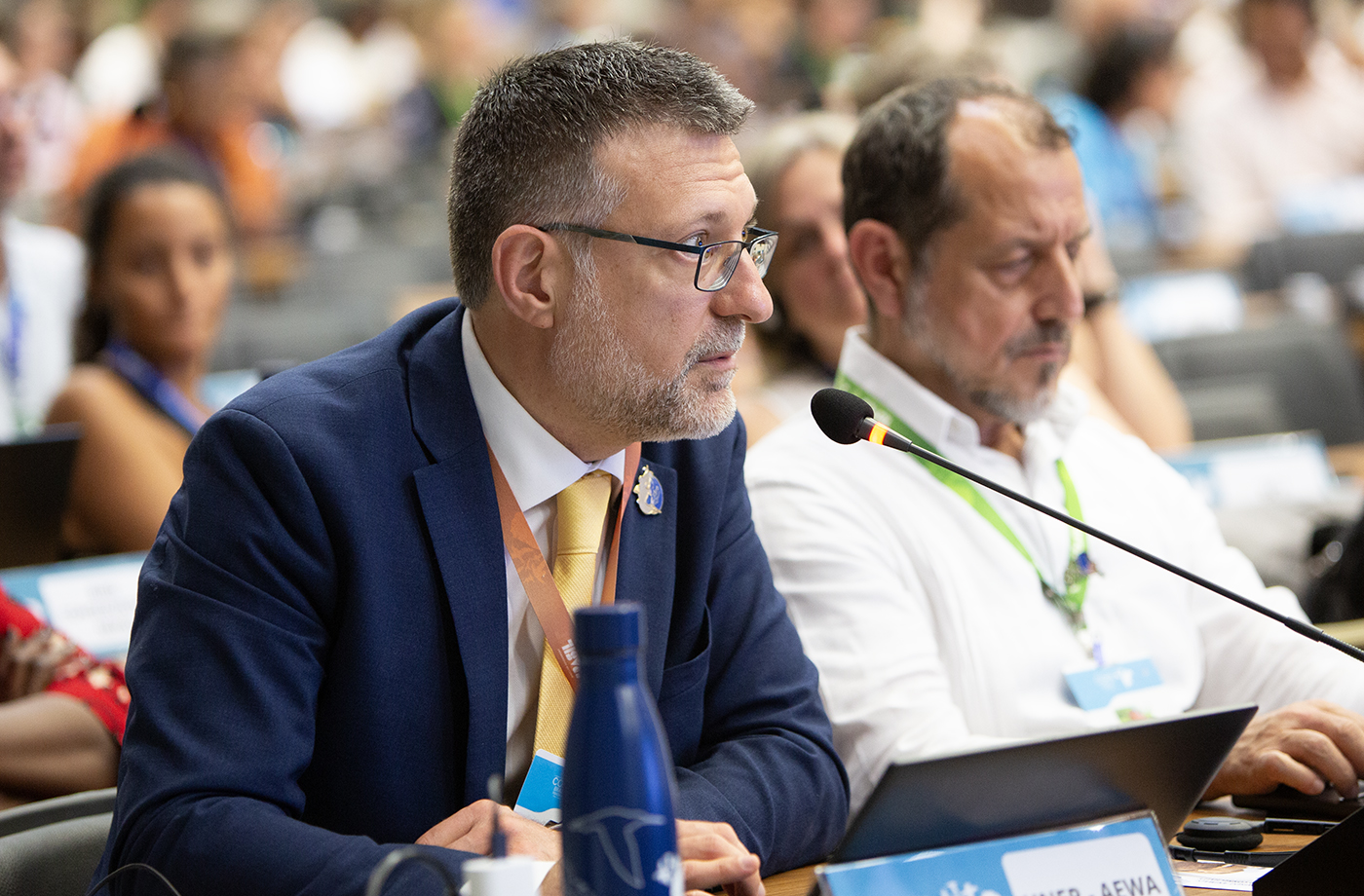
Sergey Dereliev, Acting Executive Secretary of AEWA at CMS COP15 (Photo by IISD/ENB | Angeles Estrada Vigil)
Sergey Dereliev, the newly appointed Acting Executive Secretary of AEWA, is attending CMS COP15 and is using the opportunity to engage directly with government representatives from across the AEWA region and beyond.
“CMS COP15 is a unique opportunity to bring countries together around a shared commitment and responsibility,” said Dereliev. “Migratory waterbirds depend on coordinated conservation action across borders, something that AEWA has been successfully facilitating for over 30 years. With currently 85 Parties, AEWA provides a practical and effective framework that enables countries to work together to conserve migratory waterbirds across the African-Eurasian Flyways.”
Ahead of the formal opening of CMS COP15, Mr. Dereliev participated in a High-Level Segment held under the COP15 theme, which brought together global leaders including the President of Brazil, Luiz Inácio Lula da Silva, the President of Paraguay, Santiago Peña, the Minister of Foreign Affairs of Bolivia, Fernando Aramayo Carrasco, ambassadors and other prominent stakeholders.
 |  |
High Level Segment at CMS COP15 (Photos by Ueslei Marcelino/MMA)
Invited to speak as a panellist in the high-level session on infrastructure, Mr. Dereliev delivered a statement highlighting the approaches to avoiding and mitigating the impacts of infrastructure development on migratory species. Focusing on waterbirds, he emphasized the need to better integrate flyway considerations into planning processes.
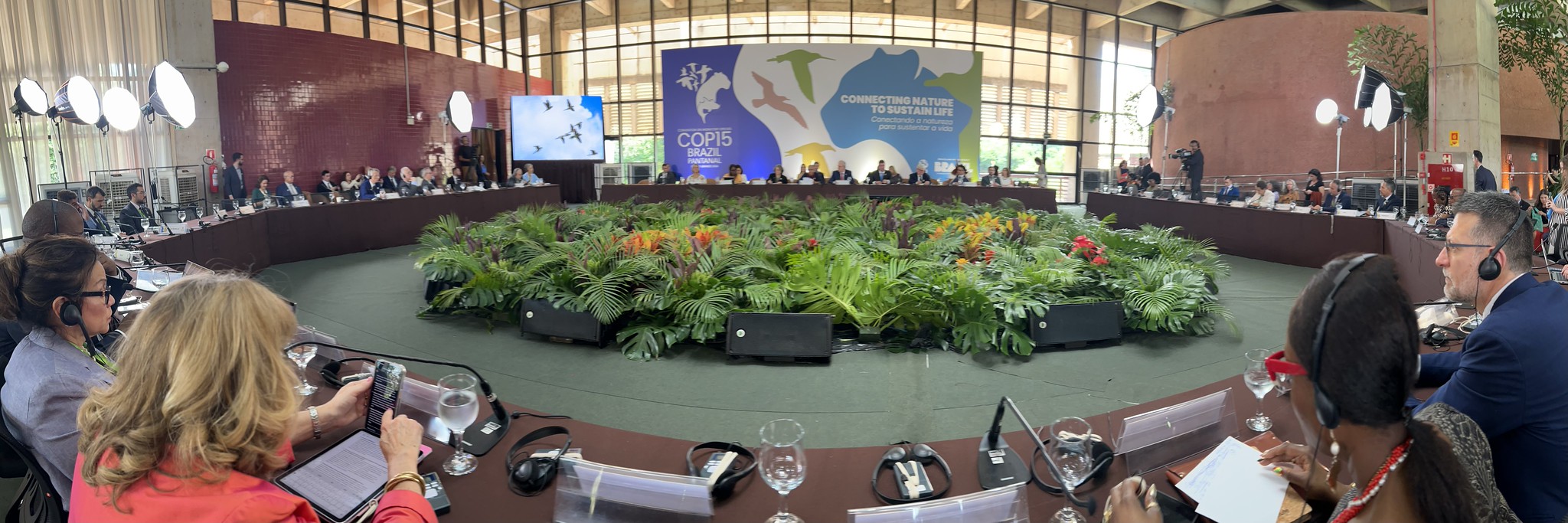
High Level Segment at CMS COP15 (Photo by Rogério Cassimiro/MMA)
Amongst the key priorities for Mr. Dereliev during CMS COP15 will be outreach to non-Party Range States: countries within the Agreement’s area that share migratory waterbird populations with AEWA Parties, but have not yet joined the Agreement.
“Expanding the number of AEWA Parties is essential to ensuring that conservation efforts are effective across the entire migratory range of our species. That's why I will be meeting with representatives of both Parties and non-Party Range States to strengthen collaboration and encourage wider engagement in AEWA,” said Dereliev. “By joining the Agreement, countries become part of a strong international partnership that supports science-based, coordinated and concerted conservation action across a vast geographic area that spans Africa and Eurasia.”
By being actively represented at CMS COP15, the AEWA Secretariat will also help ensure that migratory waterbirds, and the collective flyway efforts to address their threats, remain high on the global conservation agenda. “I look forward to promoting the accession of non-Party Range States to AEWA during COP15, but also to working with all current AEWA Parties and partners to strengthen flyway-scale conservation efforts for migratory waterbirds through a renewed commitment to AEWA.”
Mr. Dereliev is attending CMS COP15 on behalf of AEWA from 22 to 29 March 2026 and will be available for bi-lateral meetings during this time. To schedule a meeting, please reach out to him directly via email at: [email protected]
- Further Information