
Campaigns
 World Migratory Bird Day
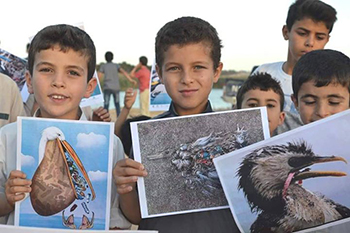
World Migratory Bird Day (WMBD) is a biannual global awareness-raising campaign highlighting the need for the conservation of migratory birds and their habitats. Every year, on the second Saturday in May and October, dedicated people and organizations around the world celebrate World Migratory Bird Day by arranging activities such as bird festivals, education programmes, exhibitions and bird-watching excursions. Event organizers are encouraged to register their events at the WMBD website. In this way, individual events can be shared with others around the world and help inspire other people and organizations to get involved.
History of World Migratory Bird Day
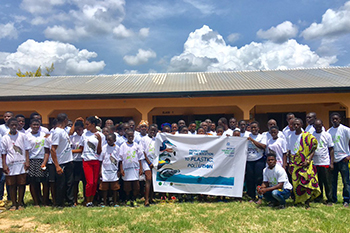 World Migratory Bird Day was initiated in 2006 by the Secretariat of the Agreement on the Conservation of African-Eurasian Migratory Waterbirds (AEWA) in collaboration with the Secretariat of the Convention on the Conservation of Migratory Species of Wild Animals (CMS). Since then, WMBD has been celebrated annually and has been growing in popularity with more countries, organizations and people joining the campaign every year.
On 26 October 2017 in the margins of the CMS COP12 in Manila, Environment for the Americas (EFTA), CMS and AEWA announced an innovative partnership uniting two of the world’s largest bird education campaigns – International Migratory Bird Day (IMBD) and WMBD. From 2018 onwards, the new joint campaign adopted the single name of "World Migratory Bird Day" and is celebrated twice a year, on the second Saturday in May and in October, making it possible to organize events in countries around the world at peak times of bird migration.
For further information, please visit the website: www.worldmigratorybirdday.org
World Migratory Bird Day 2022
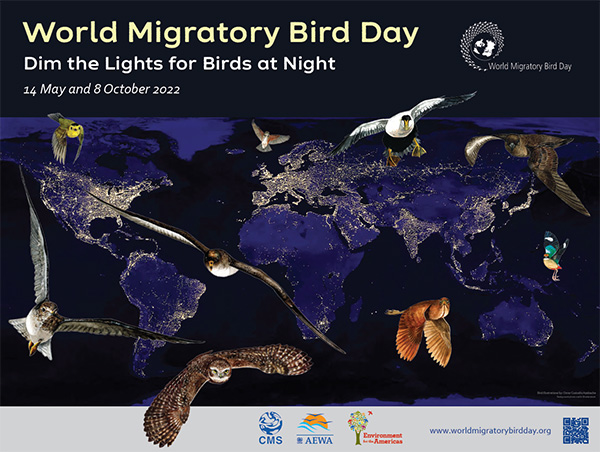 Light Pollution is the focus of the World Migratory Bird Day 2022 campaign.
Artificial light is increasing globally by at least 2 per cent per year and it is known to adversely affect many bird species. Light pollution is a significant threat to migratory birds, causing disorientation when they fly at night, leading to collisions with buildings, perturbing their internal clocks, or interfering with their ability to undertake long-distance migrations.
Solutions to light pollution are readily available. For instance, more and more cities in the world are taking measures to dim building lights during migration phases in spring and autumn. Best practice guidelines are also being developed under the Convention on Migratory Species to address this growing issue and ensure that action is taken globally to help birds migrate safely.
For more information on WMBD 2022, please visit: https://www.worldmigratorybirdday.org/
 |
 |
 |
 |
 |
-

“Sing, Fly, Soar – Like a Bird!” was the theme for WMBD 2021, focusing on the phenomena of “bird song” and “bird flight”. This was used as a way to inspire and connect people around the world in their shared desire to celebrate migratory birds and to unite around a common, global effort to protect birds and their habitats. During the pandemic, bird song has been a source of comfort and joy for many people around the world, connecting them to each other as well as to nature.
-

“Birds Connect Our World” was the theme for WMBD 2020. Connectivity is essential for migratory species, and important for a wide variety of ecological functions. It describes the natural and necessary movement of species and the flow of natural processes that sustain life on Earth. With 1 million species facing the risk of extinction within our generation, connectivity has become a central topic for biodiversity and sustainability. Migratory species move across the globe, running, swimming, flying, connecting countries, people and continents through their migration routes.
-

The theme of WMBD 2019 is “Protect Birds: Be the Solution to Plastic Pollution!” − and puts the spotlight on the negative impact of plastic pollution on migratory birds and their habitats.
With an annual production of more than 300m tons, plastic is one of the most widely used materials in the world. Lightweight and designed to last, the discarded pieces are easily transported into ecosystems through the forces of nature causing serious threats to migratory species around the world.
-
![Media Name: ENG-WMBD2018-DINA1-[FOR WEB]_sm.jpg](/sites/default/files/styles/teaser_520_520/public/campaign/ENG-WMBD2018-DINA1-%5BFOR%20WEB%5D_sm.jpg?itok=4QEQC-qJ)
World Migratory Bird Day (WMBD) in May 2018 marked the first event that unifies two of the world’s largest bird education and awareness-raising campaigns: International Migratory Bird Day (IMBD) and WMBD. The combined efforts by Environment for the Americas (EFTA) as well as CMS and by AEWA reached a record high. In May, the Campaign attracted peak attention with more than 600 events registered in 58 countries throughout the world. This year, videos of songs of the wonders of migratory birds triggered an overwhelming number of responses from the younger generation across the globe.
-

With the 2017 theme "Their Future is our Future - A healthy planet for migratory birds and people", World Migratory Bird Day has thrown light on the topic of "Sustainable Development for Wildlife and People". The 2017 theme is linked to the UN Sustainable Development Goals and highlights the interdependence of people and nature, and more specifically people and migratory birds, as they share the same planet and the same limited resources. Human activity can have a negative impact on birds’ migration, while humankind relies on birds in many ways.
-

With the theme “Stop the illegal killing, taking and trade of Migratory Birds!”, WMBD 2016 highlighted the existensial threat of the illegal killing, taking and trade of migratory birds and the need for a concerted action between governments, International organizations, NGOs and the civil society in order to end this phenomenon that each year kills millions of birds.
In the eleventh edition of WMBD, 319 events were registered from 85 countries around the world.
-

“Energy – make it bird-friendly!” was the 2015's theme, which aimed to highlight the importance of deploying energy technologies in a way that prevents, minimizes and mitigates adverse impacts on migratory birds and their habitats around the world. Every year, millions of migratory birds face dangers posed by the massive expansion of various means of generating and distributing energy. Developing new and expanding existing renewable energy technologies are essential when striving towards the common goal of a low carbon future.
-
 A record 345 events in 86 countries were carried out to mark World Migratory Bird Day 2013. Each and every one of these events represented a unique activity which brought people together around the world to celebrate and help raise awareness about migratory birds on 11-12 May 2013! The survival of migratory birds depends on the availability of well-connected networks of habitats along their migration routes.
 -
 In 2012 the World Migratory Bird Day theme focused on the cultural relationship between birds and people. Throughout time and across cultures humans have relied on birds, be it to supply food, to deliver messages, or to serve as symbols of power and prestige. Amazingly more than 250 events were registered in 81 countries around the world on May 12th and 13th, showing an increase of 25 % from 2011 and an expansion of three-fold since its inception in 2006!
 -
 The year 2011 was for World Migratory Bird Day absolute record breaker thanks to an amazing 204 registered events in 64 countries worldwide. It was celebrated on 14th and 15th May 2011 and focused on conversion of natural areas into agricultural land, the construction of buildings, roads and dams, or deforestation, which are just some examples for the human use of land, also known as land use, while migratory bird populations are particularly sensitive to these changes.